Back to GROW ANZ 2026 | HubSpot Live

Unlock Your Inner Leader: Courage, Vulnerability & Purpose

Discover how embracing vulnerability and purpose can redefine your leadership journey. Learn from a Paralympic gold medalist's path to self-acceptance and global advocacy. This session will inspire you to find your authentic self and drive impactful change.
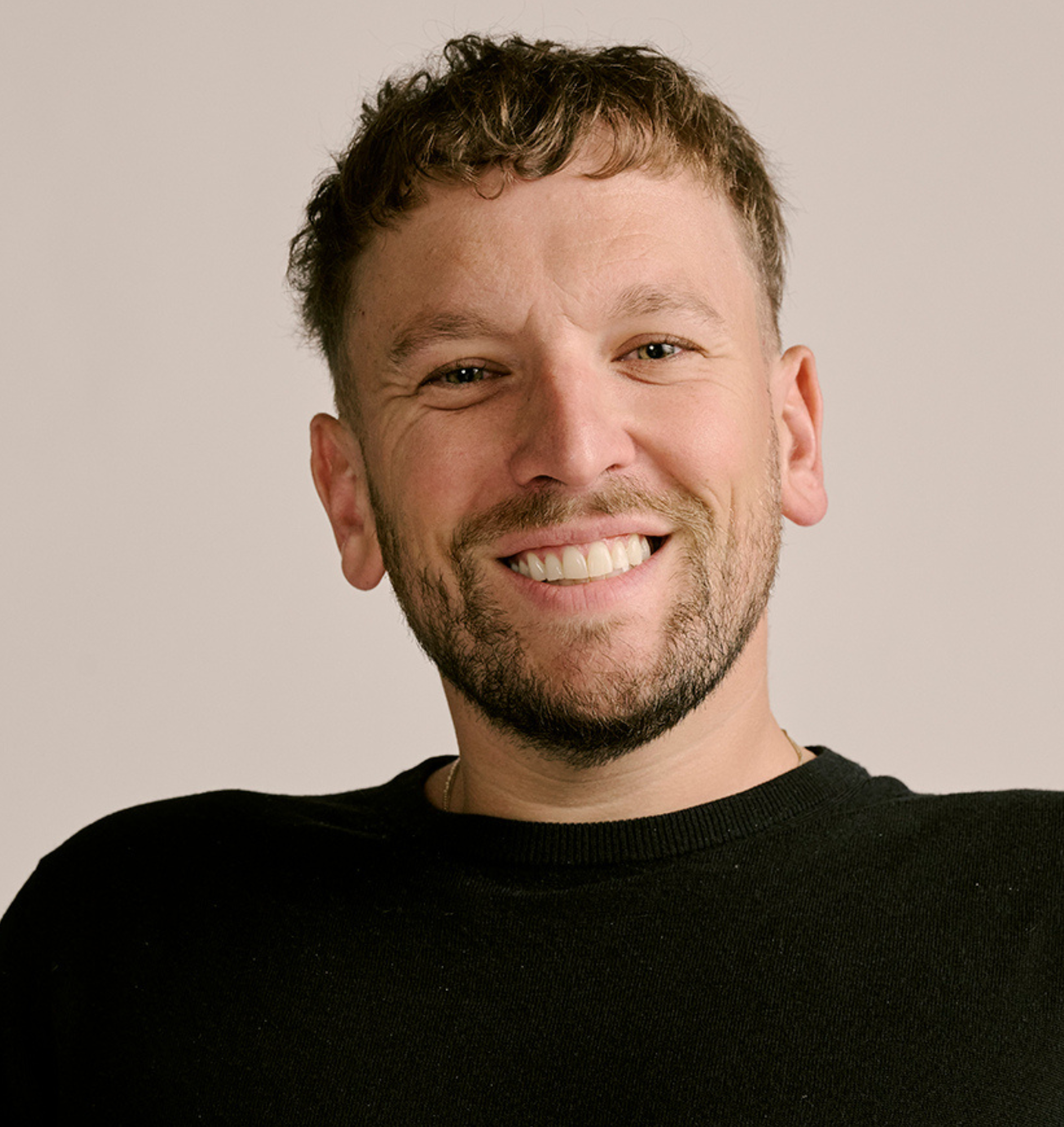
Dylan AlcottDylan AlcottParalympian & Disability Advocate

Chapters

00:20From Self-Hate to Paralympic Host

Look, and I said you're Dom Dolla's best mate, but Dom dollar's your best mate. Right? That's, that's the way we should, probably should look at it, mate. You're familiar with this place. I know that you're familiar with an audience. Is this your happ? Sitting in front of a crowd and just being able to go wherever you want? Yeah. Look, I'm really lucky these days, mate, to live the life that I live. But to be honest with you, I wasn't always like that. I was born with a tumour wrapped around my spinal cord that was cut out when I was a couple days old and I've been in a wheelchair my whole life. I just cannot tell you how much I used to hate myself. I hated having a disability. I was embarrassed about it. I wasn't proud of my disability. I felt like a burden on my family and my friends because I kind of believed this shame story. Society tells you that having a disability is the worst thing that can ever happen to you, you know, outside of death. And that's crap, right? That's not true. But we believe those things when we grow up. And you know, I'm looking at a lot of different faces right now. Everyone's different. And you know, you always try to find those negative things about your difference. And I used to do that growing up. And, you know, I'm glad that I was able to get over that and realize that there's a lot of life still to. And I've been, you know, given that I'm a torchbearer right now for the people with disability that came before me and the ones that are coming after me to, you know, talk about what it actually is like to be disabled, but also just to get out. And you know my motto in life, I love doing cool stuff with cool people. That's what I get out of bed to do, enjoy my life and have a crack, have the courage to have a crack. And I kind of fell into this speaking role. We both fell into these broadcasting roles. We wanted to do them, but then, you know, the next minute you and I are sitting under the Eiffel Tower hosting the Olympic Games together. Not just the Paralympic Games, but the Olympic Games as well. I think I was the first person in the world with a high level physical disability to host the Olympic Games. I hosted the race walk, which was funny, I kept saying, from one walking exploit to another, we're going down to our commentators. So, mate, I wake up every day and be very lucky to live in the life that I live. And yeah, when I get up to share my story with people who are not on their phones and listening and smiling, I'm pretty lucky to be able to do it. While we're on this little tangent, the cobblestones in Paris too, I've got to say we had a few little ventures out and enjoyed ourselves in the City of Lights, but mate, they don't make it easy for you.

02:47The $13 Trillion Opportunity in Inclusion

No, whoever invented stairs and cobblestones, they can get stuffed. It's like an episode of Wheelchair Survivor. I'm telling you, it's like every day you wake up and there's a new challenge. I was hanging on the back of your E bike, remember that? We're going through the streets. But equally like, you know, I travel around the world these days. Like, I'm actually going to London, Barcelona and Paris next week for talks. Not too dissimilar to this and to be able to talk about the opportunity for people to be accessible and inclusive for people with disability. Right? And you might be like, what are you talking about? Like, what has this got to do with me? And you're all from different organisations, you're customers of HubSpot, whatever it is. Does anyone know how many people with disability there are in Australia, for example? 100,000, 200,000. There are 5.5 million Australians with a visible or non visible disability, 1.3 billion globally, 20% of the world's population. And the reason people like organizations like in travel, in tech, in anything, like to be able to get out there, even like mainstream broadcasters should care about this, is not just to be socially equitable, is to make a hell of a lot more money as well. And you might laugh, but what am I? A consumer, just like you, who wants to use your tech organization and programs just like anybody else, right? And you know, we have a buying power of $13 trillion globally annually. It's a pretty big number. But we often get left out of that economic conversation because people think we can't do anything. And you saw it firsthand when we traveled to these, you know, we traveled together, we went around the World. We go to restaurants, go to bars, and they might have seen somebody like me. Right. But when they are, even if the built environment isn't accessible, if they are inclusive, listen to lived experience, ask questions, and have a crack to make it better, they get our business, don't they? Right. And it's the same with all your organizations in what you do. Not too dissimilar to me and my organization, full of people with disability, using HubSpot. Why? Because it works for us. Right. It works for us. And that is a good business decision from HubSpot. But also it allows us to then contribute and have a crack at being involved, not just in work, in education, in social settings, in employment, whatever it is.

05:02Vulnerability: The Ultimate Leadership Superpower

There is a leadership theme to the discussion today and vulnerability. And that's one thing. I mean, you're showing it right now and you've shown it for so many years. Do you see that and being able to be as open and honest as you are as some sort of superpower to enable you to inspire everyone? Yeah, look, I think the power in vulnerability is one of the best leadership tools that you can have. And you're all leaders in this room today, in the organizations that you work in. And gone are the days in the 60s, 70s, 80s, 90s, where you have to be these leaders who have all the answers because that doesn't make you relatable to your teams. Now, I think the best leaders are the ones who work for people, not have people work for you. Right. You listen to them, you listen to the experience and you open the door so they can thrive when they go to work and not just survive and get out there and be the best and contribute to that organization so you can all reach your results. And you know, these stoic. I'm not saying you always, you know, have to be super, super vulnerable sometimes you got to be strong as leaders. And I understand that. Right. And I have to be within my organizations, even in my community. Right. When I'm, when I'm advocating or whatever it is. But the best leaders are the ones that vulnerable and say, hey, I don't know how to do this. Can you give me a hand? Or do you want to co design and work on this together rather than come up with all the answers and individual. I learned that the hard way. I got bullied pretty badly about my disability. I got left out. I used to get called a cripple and a spastic every time that I turned up at school or went to a house party. And I hate those words. They've got A real negative connotation that you're broken, less capable, unachieving. And words that used to get used to describe people with disability back in the 70s, 80s, 90s, we might accidentally still say them today. How many drinks did you have on Saturday night? Mad Al, Spastic or whatever it is. And these words really hurt. And I believe them. And for two years of my life, I sat at home playing video games, eating junk food, embarrassed to leave the house because I wasn't proud of the person that I was. And for two years, the biggest regret that I had in my life was I didn't tell anybody. I didn't tell my brother, who's my best mate, my family, my schoolmates, because I felt like an embarrassment and a burden on this. But then once I told my brother Zach and my family, after two years, they were like, mate, you're being silly. Like, we don't think that about you. And just because two idiots say that to you, there are 10,000 other people that are worth your time. And then I always use this example when I go to the supermarket, right? I can't reach things. If I saw you brace and I came up to you and said, hey, mate, can you help me reach the milk? Am I lesser than you for asking for help?

07:50Why Asking for Help Makes You Stronger

I probably think more of you. Exactly right. I have to be vulnerable every day to be able to get out there and live the life that I want to live. And I used to think that made me lesser than. But actually it's the opposite, because you build connection and you build rapport with people, right? And you open those communication channels and it allows people to be authentic and be their authentic self when they bring themselves to work and. Yeah, you know, but in our line of work especially, mate, and you've seen. I've seen us both do this. When something that affects us happens on tv, we lean into it. We don't run away from it, right? Because we're just being ourselves. And, you know, I don't want any kid disability or not to kind of go through what I went through, but, geez, I'm glad I did because it made me a much better person. And I learned that at such a young age. And I now try and bring it into, you know, absolutely everything that I do today.

08:44Gold Medals & Overcoming Bullies

And rather than these days thinking about those bullies and flipping them the bird, you can just whip out a gold medal, you can whip out a grand slam trade. I do. What about those poor bastards when they see me on tv? Or they might be, you know, they might see me talk about like, ah, that was me. Well, that's a good feeling, right? That's. You win, they lose. Do you have some show and tell on you today? I don't always do this, but the team at HubSpot's been absolutely unbelievable. So no one. You haven't seen it yet. It might be shit. So this is one of the gold medals right here. Thank you. I'll tell you one quick story. This was for wheelchair basketball. So I was 17 years old at the Beijing Paralympic Games when I won that. And to sit on top of that podium with 12 of my best mates. Guys have been through hell and back in order to get there. My captain, a guy called Bradness, he was hopeful of getting drafted in the afl, the Australian Football League, if you're not from Australia back in the 90s. And he was working over in the docks in Western Australia to earn a little bit of money before he made the move to Melbourne. And one day, one of his mates accidentally, or as a joke, tied one of the boat ropes around Brad's leg. The captain of the boat thought someone said, go. The boat took off, the rope tightened around his leg and it sliced his leg straight off. That day, obviously never to play football again or walk without a prosthetic. Another teammate was out celebrating a rugby final in country Queensland. It was the first premiership his town had won in 20 years. He was so keen to get back to the pub to get, you know, celebrate with his friends and family. He got in a car with his fiance and his best mate. His best mate was also a bit excited, driving a bit fast, lost control of that car and crashed. And my teammate lost his fiance and his best mate that day. And he was after paraplegic, never to walk a step again in his life. At 23 years old and at one point in all of our lives, we'd all given up hope. I know I had. I honestly did not think my life was going to amount to anything. I really didn't. I didn't think I'd be sitting here today with you all potentially sitting here at all, if I'm honest. And to sit on top of that podium, side by side, watching that flag go up. Tears running down our. Gets me going now. Tears running down our face. Just so bloody proud of one another. What we just achieved, that was one of the best moments of my life. And I got to experience that when I was still a kid. And 99.99% of the population that's ever lived on earth has no idea what it's like to win A gold medal for their country. And I'm extremely honored and lucky to one of those people, mate, which is pretty cool. So this is the one from Beijing. Got another one. Hang on a sec. This is one of the tennis ones. Can everyone hear this? Let's. For the first time ever, the medals had ball bearings in them. 28 in the gold, 22 in a silver, 16 in a bronze. Paralympics, think about it, they all make a different sound. 4. Anyone clever? The blind athletes.

11:48The Secret Sound of Paralympic Medals

Gold, silver, bronze. Yeah, so you could see the blind athletes on the, on the podium. They were like, yep, yep, mine sounds better than yours. Just to make sure. It's pretty Good. We got 17 minutes on the clock. Anyone have a look? Do you want to have a look? Do you want to pass them around? A couple of rules. One, I know they're heavy. Don't tell me they're heavy, right? Some smart ass like, God, it's heavy. I'll tell you what, they're ratty, mate. They've done the rounds. There we go. Also, if you try and steal it, I will find you and I'll run you over my car. Okay, deal.

12:22Reinvention: Finding Your Purpose Beyond Sport

Now, a question I do want to ask you about today. You talk about your career as an athlete, a basketballer, which there'll be a lot in this room that didn't realise that you did. Wheelchair basketball, the tennis playing, obviously, which is where you really put your name up in lights. And then life beyond tennis, you sort of did the transition into broadcasting along the way. And in the business world, no matter where you are reinventing yourself, it is something that eventually you have to do at some stage, and there's probably the whole world's doing it at the moment with the AI movement as well. Do you remember it? Any key points throughout your life where you actually had to do that? Are you doing it now? Yeah, I do it all the time. You know, going back to my motto, which is, you know, it's actually doing cool shit with cool people, not cool stuff is what I normally would say. You know, I always try and find ways to innovate, change perceptions that align with my purpose. Right. Even though I'm constantly, you know, re evaluating and relaunching what I'm doing, it always aligns to my purpose. My purpose is to change perceptions so all people with disability or around the world can get out and live the lives that I deserve to live. Four years ago, three years ago, I retired from tennis. The reason I did is not because I hated tennis, I loved it. But I said to myself, do I need to win one more Australian Open, to live out that purpose. And I was like, not really. Right. And now your purpose might not be change the world for a diverse group of people. It might be to be like, provide the best life I can for my kids. That might be your purpose, right? Or it might be like to uplift people at work so we can achieve. That might be your purpose, but it really helps your decision making process right now. Is this aligning with my purpose? I think it is. There's a thousand people in this room from a thousand different organizations that I can talk about what's important to me that aligns with my purpose. Right? That's why I said yesterday and getting to do it with one of your best mates, right? A cool person doing some cool stuff, right? So I always all think this, but in saying that it can be scary when you want to try new things. I got an opportunity to broadcast on a different network to where we work now, back when they had the tennis. And I remember it was like my first big moment, right? And I'm like, I can't stuff this up. And I. It's when I really first learned about the power in authenticity, in being yourself, right? Which is the scariest thing to do. I never saw anybody like me on tv. When I did, it was a road safety ad where someone drink drives, has a car accident. What's the next scene? Someone like me in tears because their life's over. Deterring you from speeding or drink driving. That's all I ever saw. I saw people like you brace. So when I got an opportunity to broadcast, I thought I had to be like Bryce, genuinely. And I'm like, I have to be like, less disabled somehow. Like, I know it sounds weird, but that's what I thought. And I was so bad because I wasn't being myself. And then I remember I got an opportunity to interview this young tennis player called Rafael Nadal. He's new, but it was during the Match on Court interview. I had to go up and interview him. And the broadcaster was petrified because I was sitting down and he was going to be standing up, like, how's it going to work? Right? And me being me, I thought, I've got to be myself here. I just said, I'm just gonna put a bloody microphone to his mouth like everybody else. That's what I said to the head of this network. And they were like. I just said in such a normalizing way, they were like, okay, we'll give you a crack. That interview was watched by 150 million people. Around the world. And that image was broadcast back when X or Twitter was the one going, like, how cool is this? A wheelchair tennis player? Dylan Alcott interviewing Rafael Nadal. Powerful. Yeah. And that's when I was like, wow, I've just got to actually be me, be authentically me. But it took me. I just turned 35, washed up, and I don't think I've ever told you this brace. It took me 29 years to fully feel worthy of love and worthy of my disability, even though I've been broadcasting for a decade on Triple J. And, you know, I was just pretending, genuinely.

16:34The 29-Year Journey to Self-Worth

Was there a moment? Is that the moment you talk about 29 years. So obviously there's that turning point. You know what I did? I worked hard on it. I really wish I could say you just wake up one day, but I did a lot of work on it. Right? And I'm not saying you've got to go see a psychologist or a mindset coach. There are many ways that you can work on it. You can write something down right now that I said that resonates with you and do some research. You can use AI. You can talk to a friend, you can listen to a podcast. But I asked myself genuinely, who am I and what do I want? But when I ask myself, who am I? That's a scary question, right? Because you gotta go, you know what? I do have things that I'm still self conscious about, like, you know, dating and all these things that I really struggled with, but it's who I am and I had to go, that's okay. And if it's not right for someone else, you know, that hurts. But you can find somewhere else. Or if same for all of you. If you work at a place and you can't feel like you can be your authenticity, authentic self at work, go somewhere else. Find your tribe and your community where you can be yourself. Right? Because once that weight is off your shoulders. My life changed so much. And the number one way it changed was I became a better person. I became a better person. And I didn't worry about extrinsic motivators like metals and logis. I started worrying about intrinsic motivators, like supporting people that I love, being there for them. Starting the Dylan Alcott foundation, where we support young Australians with disability. And, you know, it really, really deeply changed my life. And. But I put a lot of work into that. And I still do. I still see a psychologist. And when you say that, people go, oh, you okay? It's like, no, that's what we all love crapping on about going to the gym. And we do. How much do you say about gym workouts online? And then as soon as you say, oh, I'm actually seeing someone to work on my, you know, mental strength or mental health, whatever you want to call it, everyone goes, ooh, shit, you're right. It's like, no, I just want to kick ass in life and enjoy it. Right. It's a different way to think about it, isn't it? And working on that mental muscle has really helped me. And even AI tools, there's so many tools out there now where you can do these kinds of things and, and then equally, mate, like, you know, did I remember watching the Olympic games? You and I sit next to each other broadcasting it. What the hell? Like, never thought that would happen. I'm acting these days, like I'm getting flown to LA and having auditions with Hollywood superstars and I'm like, what is happening? Right? But, but equally I've been putting the work in. I always, I wish, you know, I think the biggest traits, I've already said two of them is that authenticity and vulnerability, but the other two is, is the courage to have a crack, the courage to get started, right? I've always wanted to be an actor. Everyone's like, what are you talking about? I went to acting school, I put the work in. Now I'm writing a TV show with like a big broadcaster in America, which I can't tell you about yet. I kind of just did. Do we have to wait for Entertainment Tonight? We've got to wait for the scoop. I'm not giving you the scoop now, Bryce. I want to make a global documentary, around the world based on travel and people with disability. Kind of like Anthony Bourdain and Louis Theroux. How do I start that? I started it, right? But then equally, if you want to do something, there aren't really any shortcuts as well. You've got to put the work in and try and become the best you can at that as well.

19:56Courage to Have a Crack: My Acting Ambitions

I reckon 17 year old Dylan Alcott would be pretty impressed with 35 year old, washed up Dylan Alcott. He'd probably be like, shut up, dickhead. Look, everyone in some way, shape or form is going to look at some stage in life, whether it's at work or not, to a mentor, to someone to look up to. Have you had a few throughout your life that have had a huge influence on you?

20:19My Brother, My Mentor: The Power of Your Tribe

Yeah, look, you know, my brother Zach, first and foremost, one of my favourite stories is, you know, we're best Mates these days, but safe to say we weren't always. We had cable tv, Foxtel from Australia, and we used to always fight over the TV remote. And whenever Zach would get up to go to the bathroom, I'd crawl over and get the control. Zach's quite smart. He's 6 foot 5 these days. So whenever he got to go to the bathroom, he'd walk into the kitchen and put the TV remote on top of the fridge. What a jerk. But my brother never cared for one day that I was in a wheelchair, right? He loved me for who I was and treated me like I was anybody else. And I learned that off him. And there's times when I forget that still, right? When I have bad days or something happens to me where I get discriminated against, I'm like, ah, this sucks, actually. And I want to have a kid one day and he's going to have to teach him how to kick a football. That sucks. I'm not lying about that. I go to the beach and I sit 50 meters away on the path while you all walk on the sand and jump in the water. Something I've never been able to do, nor will I. I'd be lying to say if that doesn't suck as well. But every one thing that I can't do, there are 10,000 other things that I can do. And I learned from him, right, that as long as you've got good people around you that back you, you can do whatever you. Whatever you see, you know you want to do in your life. And outside of that, I really think I'm a sponge of little things of lots of people rather than have one mentor. I'm going to embarrass you, but James is unbelievable at his job. Unbelievable, right? And I used to see how he would manage a broadcast and be like, I want to be like that. And then what did I do, James? I came up and asked you, right? I asked you for advice and we became friends. And the reason you're good in our industry, not everyone always says yes to that because they want the job, right? And you were like made 100% right? And that's how we built a friendship, first and foremost. But that's how we can perform to up to 10 million people every year at the Australian Open or when we broadcast the Olympic Games, right? And I'm never afraid to go up and ask someone, can I? Hey, I love how you do that. Do you mind teaching me, educating me so I can just be better at my job? But you're actually not just Better at your job. You become better people in that and you build friendships and things like that. And I think, you know, for me, I'm so lucky that I've got a network now of people that I care about, but they care about me too. And, you know, I always say, we won Wimbledon, we won Australian of the Year. And everyone says, no, you did. I said, well, I'm nothing without my team, my coach, the people that work in my foundation, my brother. It sounds weird when you say, but like, I'm like, we were world number one. My coach left his kids for 10 months during COVID so we could win the Golden Slam. What's harder? That or hitting a serve at Wimbledon? I would say the other thing is not seeing his kids is harder. I got the hard, the easy job, right? And I think that when I figured out that language, but also really started believing it and making everything about, you know, we and team and co designing and doing things together, it opened a lot of doors for me.

23:46"How Effing Good Is This?": A Mantra for Life

Takes a village. One thing I love and thank you for the rap, but it's. And why wouldn't you want to be mates and colleagues with a bloke like this is watch our former athletes in our Wide World of Sports productions come in and take on the role of broadcasting. And that competitive spirit never leaves. And if they muff a line, they'll spend two minutes just kicking themselves about it and then tell the producer, go and put me in another spot now and make me do something similar again so I can show you I can do it. Do you find yourself like that, being a former athlete now in a broadcasting space? Great question. I've never been asked that. I was never competitive with my opponents on the tennis court. I personally liked them all, but I was really competitive myself that I wanted to prove that I could do it, right? I wanted to win the Golden Slam, show that I could do it, not prove it to any of you, right? And I think broadcasting is a great example and acting as well, and anything in the mainstream. I probably want to prove to the industry that I can do it, it, but not just me, the next Dylan can do it, and the Dylan after that and the Dylan after that. That's where I get that drive from. But when I would stuff up, or, you know, we all stuff up, you know, we stuff up a lot. I kind of don't want to get another chance to prove that I can do it. I kind of actually lean into it, right? That's my style of doing it, right? And because, you know the saying, the man or the woman in the arena. We are in the arena. Out there, we have the keys to broadcast people's stories to hundreds of millions of people around the world. If you told bullied Dylan that he had that, he'd be like, let's go, right? Let's have a crack. And I think, you know, I always remind myself and I think I work with my mindset coach, a guy called Ben Crow. We have this thing called courage mantras. Words that we would say to ourselves when we were had a moment of anxiety or nervousness on the court, in broadcast, whatever it is. And like, you know, actually he also works with Ashbad. He's a really good friend of mine. Hers was I decide, I decide what happens here. No one else, right? That was hers. Mine was. And I won't swear, but I would go out on Rod Laver Arena, 20,000 people, 100 million people watching around the world. And I was just trying not to vomit. I was so nervous, right? Do you know what I would say to myself? How effing good is this? I would say it over and over again, how effing good is this? As loud as I could on the court. I got goosebumps saying it. I said at the Olympics when I was nervous before the first broadcast because if you were told young Dylan or for hopefully someone with disability, watching someone like them on TV for the first time, just being them, they would think, how good is that? I say it over and over to myself. I could see myself in the warm up when I watch back a replay going, how I feel good this, how often good this, how often goods this. But it works, right? And that is a way to practice gratitude, right? In moments when you are having a bad day and I have bad days all the time, I try and find little things and I'm like, you know what? I'm so lucky to have my dog Source. It could be as small as that. Or, you know, you and I in Milan host the Olympics when it's freezing and it's hard and we're tired, we're like, oh my God, I'm actually broadcasting Olympic Games right now. That's pretty sick. And even just saying it out loud to all of you as well when, you know, a new system comes into work that you've got to try and learn about or something like that, or you break up with your partner or whatever it is. We all go through these things, right? But I'm a big believer in this. It is not the events in life that dictates the life that you live. It's your decisions around the events that determines the path that you take. And I don't have control over my conditions, do I? But I do have control over my decisions and my mindset and how I view the events that happen to me and what my response is. Right. And once I figured that out, I realized that I had the control over my life, not society, placing the control on me about what I can do. And yeah, I really practice that literally every day to be able to get out there and be the person that I want to be.

28:01The Dylan Alcott Foundation: Changing Lives Globally

I love it. There is a QR code for your foundation as well. That's nice. Give us a spiel. We directly invest in young people with disability all around the world so they can get out and achieve their dreams. We currently have 50 young people that we pay fully for them to go to university. We pay for young aspiring musicians, the equipment and, you know, the DJ producing gear, whatever it is. We had 13 athletes go to the Paris Paralympic Games. How cool is that? We won two gold, four silver, three bronze directly from the investment that we made into them. I was broadcasting it, like, crying, like it was unbelievable. And equally, we also run awareness campaigns around the world. We work with the biggest brands in the country to help put more people with disability in their advertisements. We run a music festival called Ability Fest, which is just like Coachella. We just make it accessible for people with disability. We ran it last week in melbourne. We raised 450 grand. Right. And we had people disability. We had panel people with disabilities. It was unbelievable. I also went to Coachella a couple years ago with Dom and the head of Coachella was like, ah, you run Ability Fest. We copied what you guys do. I said, where's my tickets? What the hell? Yeah. So, you know, it's tough times at the moment. If you're struggling, please don't have to donate. But it is going to a good home. And as I said, I just want to keep using my platform to directly support as many people as I can.

29:19What's Next? Taking Advocacy to the World

I love it. Well done to you on it. Before we wrap it up, I was going to ask you what's next for Dylan Alcott, but I'm judging by the trips overseas and some acting. You won an Oscar, not just a logie. Is that what. Yeah, I love an Oscar, mate. Yeah. You know, I really want to take my message to the world. That's what I want to do. We've. I've been so grateful for the support in Australia. Australian of the year. What the hell? Like, I still can't believe that. And I think we've really put disability in the vernacular of the country. But I go to other places around the world and, you know, it's not as far advanced as we are here. And, you know, why can't there be broadcasters, actors, all these kinds of things in other parts of the world, the us, the uk, wherever it is. I do a lot of motivational speaking. I'm off to Paris. Where am I going? Barcelona, London next week, and all kinds of cool stuff. So, yeah, I'm very lucky. But most importantly, I just want to wake up every day and enjoy my life, man. And I really am doing that at the moment. I'm in a really good spot where I'm feeling creative and supported and it's so important to be able to do that. And, yeah, to be able to get up here and say, g', day, everyone, is why I get out of bed. And I'm really grateful to be here. He's a special sort of human. Ladies and gentlemen, thanks for having us today. Thanks for having us, everyone. Appreciate it.

Organizations should prioritize accessibility and inclusion not just for social equity, but also for significant economic benefits. There are 5.5 million Australians and 1.3 billion people globally with disabilities, representing 20% of the world's population. This group has a global annual buying power of $13 trillion, and inclusive businesses gain their patronage.

Dylan Alcott's purpose is to change perceptions so that all people with disabilities around the world can live the lives they deserve. This purpose guides his decisions, including his retirement from tennis, as he evaluates if his actions align with this overarching goal. He aims to use his platform to support and advocate for others with disabilities.

Dylan initially hated his disability and felt like a burden due to societal perceptions and bullying. A turning point came after two years of isolation when he confided in his brother and family, who reassured him. He learned that vulnerability, like asking for help, builds connection and rapport, which is the opposite of being lesser, and it took him 29 years to fully feel worthy of love and his disability through hard work and self-reflection.

Vulnerability is one of the best leadership tools because it makes leaders relatable to their teams. Modern leaders should work for people, listening to their experiences and opening doors for them to thrive, rather than having all the answers. Being vulnerable, like admitting "I don't know how to do this, can you help me?", fosters connection and co-design.

The Dylan Alcott Foundation invests directly in young people with disabilities globally to help them achieve their dreams. This includes fully funding university education, providing equipment for aspiring musicians, and supporting athletes for events like the Paralympic Games. They also run awareness campaigns and an accessible music festival called Ability Fest, which recently raised 450 grand.

Dylan Alcott was born with a tumor wrapped around his spinal cord, which was removed when he was a few days old, leading to him being in a wheelchair his whole life. He initially hated having a disability and felt like a burden, believing society's negative views.

Yes, for the first time, Paralympic medals were designed with ball bearings inside them. Gold medals have 28, silver 22, and bronze 16, making each medal produce a different sound. This feature allows blind athletes to distinguish between the gold, silver, and bronze medals by sound.